Summer Programs near DC that don’t cost the world

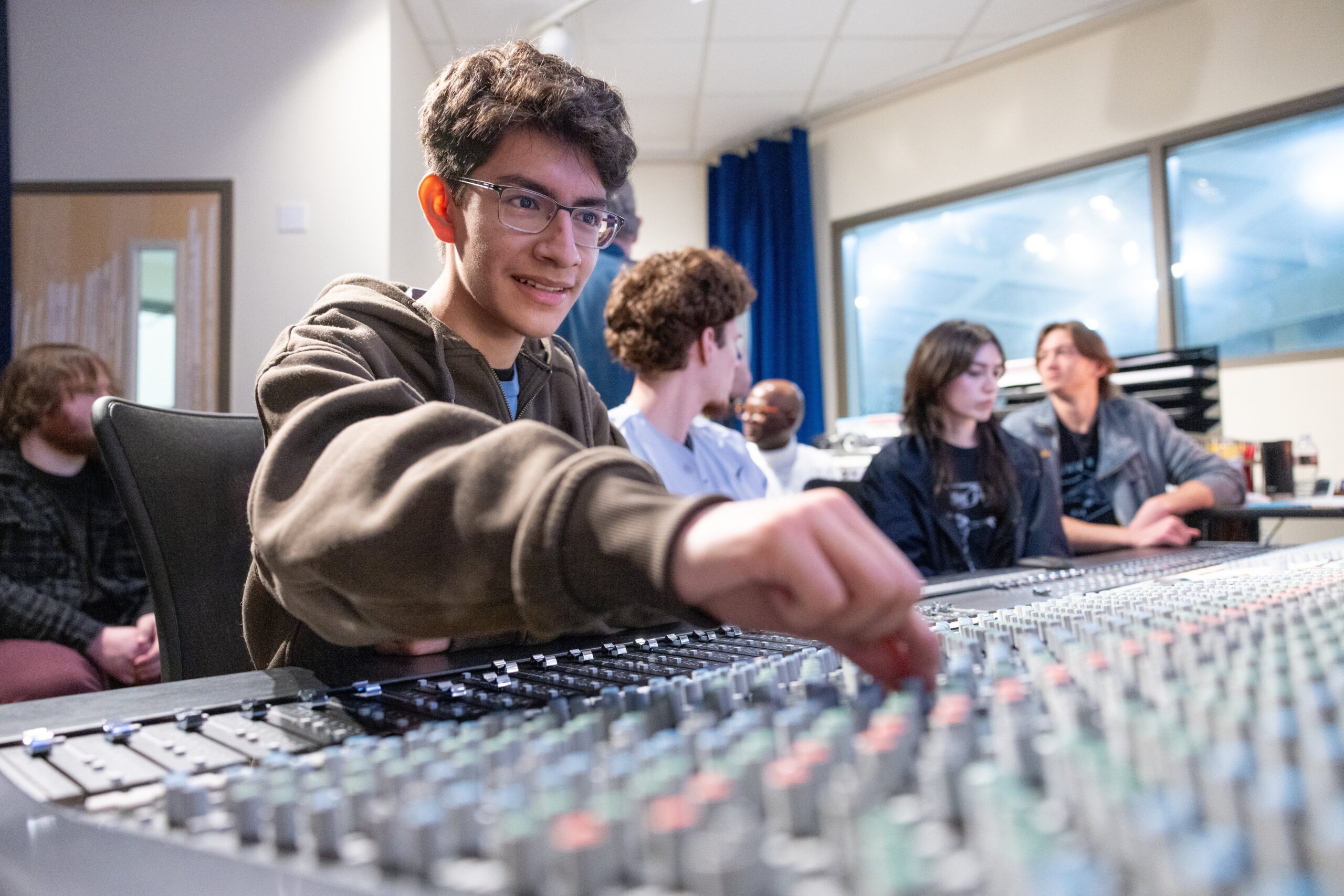
Image of student using a soundboard

George Mason

Aspiring Scientists Summer Internship Program (ASSIP)

Commuter or Remote: Students who live in Northern Virginia and can commute to one of three GMU sites or students looking for a remote science research project from anywhere can join the Aspiring Scientists Summer Internship Program (ASSIP) to work “one-on-one with faculty researchers at George Mason University and collaborating institutions using state-of-the-art technology across many disciplines”. Program costs are approximately $1300 covering 8 weeks of research mentorship and 3 college credit hours transcripted as “COS120: Introduction to Research”. 

https://science.gmu.edu/assip

Conflict Resolution Youth Summit

4 day program in June costing under $900. Provides experiential learning in “leadership, cross-cultural understanding, and community engaged dialogue “.

https://carterschool.gmu.edu/prospective-students/conflict-resolution-youth-summit

University of Lynchburg

Summer Scholars Institute

A bit further away from DC, students interested in Health Professions can enroll in this fully residential, one-week program for less than $1000. 

MICA Summer Pre-College programs in the Arts

2 and 4 week programs help students considering a major in the arts experience life at art school. Fields include traditional studio arts as well as Graphic Novels, Animation, Product Design and Textiles/Fashion. 

https://www.mica.edu/academics/youth-and-teen-programs/programs-for-teens/precollege

Virginia Tech

C-TECH 2 – Biomedical Engineering

Students will explore the field of engineering by participating in hands-on sessions with faculty from across VT’s engineering faculty. Each student will perform one “biomedical engineering themed design project”. Program is residential for 2 weeks for $2500

https://eng.vt.edu/ceed/ceed-pre-college-programs/c-tech2.html

University of Mary Washington

Summer Enrichment Program

One week program in mid-July for 10th-12th graders includes exploratory courses in an amazing (and unique) set of fields. Fully residential and only $1200 including off-site trips. 

Hampton University

Rising Seniors or Graduating High Schoolers considering an HBCU will especially benefit from Hampton’s 5-week long summer “Rising Seniors” or “Summer Only” program (including options for students between high school and college) earning college credit in two common general-ed requirements: history, oral communications, or a social science for only $2660 including tuition, room and board. The program does not include as much social programming as the other programs; students should be prepared to live pretty independently.

James Madison

Summer Honors Institute

This non-credit, one-week program with hands on seminar experiences with JMU faculty is only $1500, covering all academic and residential expenses. Students will take one college-style seminar every morning and choose from several elective workshops across the campus’s academic fields each afternoon.

https://www.jmu.edu/outreach/programs/all/honorscamp/index.shtml

Make this a Summer of Discovery

What are your goals for summer? Do you want to:

  • Relax poolside?
  • Take a break from the routine of school?
  • Visit family, friends or someplace new?

You can do all of that, and still have time to do a little something more. Summer isn’t endless, but it can be boundless, and sneakily productive. College admissions officers want to know who you are and who you’ll become. Summer is a great time (when you aren’t burdened by deadlines and tests) to try out some things you’ve always thought you’d love, those things that you have wished you’d have time for in college or as an adult, things you’ll be able to show off on those applications later. 

And, bonus, even if you start this because you think it might help you with your college applications, it should also be fun for you. That’s the point, after all… to discover what IS interesting and fun for you (and then be honest about it on your applications).

So, this summer, with its long, lazy days, why not take some extra time for yourself to discover new passions and knowledge that can change the rest of your life?

How can you have a summer of discovery? 

  1. Vow to pick up a book or magazine every day. Maybe you’ve gotten out of the habit of reading. Maybe you associate reading with projects and tests. Don’t pick those kinds of books. Pick things that look fun. Non-fiction, fiction, memoir, whatever, but something related to something you’ve always wanted to do or know.
  • You’ll likely learn a lot about what you like and what you don’t. 
  • You can use what you learn to infuse your conversations, future personal essays and college interviews with fascinating tidbits from your reading.
  1. Set short, specific reading goals. It might be something like, “Read one magazine article on bird-watching” if you have an interest in birds. Or you might say, “I will read for ten minutes a day the first week, 15 minutes daily the second week, and then 30 minutes daily from that point forward.”
  2. Use your breaks and moments of free time to gain knowledge. When you carry your book (or e-reader or phone) with you each day, you can steal a few moments throughout the day to read. 
  1. Your smartphone likely offers some great podcasts, either audible or video, that can educate you on a regular basis on topics of your choice. Try a podcast series about your curiosities, or try a different podcast episode every day.
  2. Visit museums. Explore via your senses on a museum tour. Whether your interest lies in history, art, or something else, plan trips to several different museums this summer. If you’re stuck inside or far from options, do virtual visits. With the lockdowns caused by Covid-19, many of the world’s best museums created virtual visits to bring you up close and personal with their collections, even if you live 1000s of miles away.
  3. View documentaries on television. With Netflix, Amazon, Youtube, CuriosityStream and the rest of the internet, you can definitely find something interesting to watch and learn about your fields of interest. Is it history, politics, science, or the modern world that fascinate you? Pick a theme for the week and watch a documentary a day. Write down some notes about it. Could you do this work every day? Could you write essays about it for the next 4 years?
  4. Ask questions and create opportunities to talk to real people in the field. You might have people all around you who know things you have no idea about. Use people as resources! 
  • Are you curious about what life is like as a professional bio-chemist? an Antarctic base staffer? a librarian? a game designer? Hang out on Reddit’s Ask Me Anything threads and get the inside scoop on real careers.
  • If you’ve always wanted to know more about art history and your uncle is a high school art teacher, ask him for some guidance in how to begin a self-study of art history.
  1. Start a feature film movie list. One way to learn about different locales, jobs, and life situations is to watch more films. Films aren’t only entertaining – they can also teach you something about people’s attitudes, relationships, and jobs. Some movies portray real people and true life situations. Consider these classic movies to give you an interesting start on your own list (ratings vary):
  • A Beautiful Mind (mathematics)
  • Pollock (art)
  • Rain Man (autism)
  • Amadeus (music)
  • Primary Colors (politics)
  • Good Will Hunting (genius)
  • Erin Brockovich (environmental and social activism, law)
  • Moneyball (statistics and data)
  • Selma (social activism, civil rights)
  • Spotlight (journalism and investigation)
  • Capote (authors and creative writing)
  • Just Mercy (social activism, racial injustice)
  • Apollo 13 (space flight, astronauts, aviation engineering)
  • The Social Network (entrepreneurship, social media, internet)
  • Gorillas in the Mist (animal research, conservation)
  • The Imitation Game (mathematics, genius, LGBTQ)
  • The Big Short (finance, Wall Street, housing)
  • The Theory of Everything (physics, personal/medical challenges)
  1. Take a MOOC. Choose a short course to start learning more about your potential major. Rather than paying and taking it for credit, choose the free option to allow you to take quizzes and read the essay prompts without grades or stress. Consider: How do classes in your field of interest work? What kinds of questions do the professors ask the students to ponder or to write essays about? What do the people who teach the MOOC do every day?

Summer programs can be self-created. You don’t need to enroll in a formal camp or group learning program. A self-created summer plan shows initiative and real personal interest in what you’ve chosen to do. And, with these kinds of options, your time can still be part of a fun, lazy and all things wonderful that summer should be.